
How to Start a Drone-Based Business – A Beginners Guide
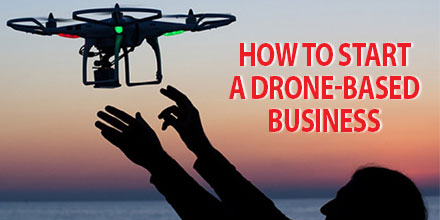 Drone is one of the buzzwords of 2016 as Unmanned Aerial Systems continue to enhance and disrupt various industries.
The capabilities and benefits of UAV’s has led many to adopt this technology. This technology has also created a myriad of additional commercial opportunities, as well.
Simply creating a successful business enterprise based on drones is not enough. Effective implementation requires careful planning and training.
With this in mind, we’ve created a guide on how to start a drone-based business for beginners.
Preparation and groundwork
If you’re interested in a drone-based business, your project starts with understanding your UAV. Familiarize yourself with your devices’ operational manual before putting it together and flying it.
Understand the FAA’s rules on flying drones and abide by them. The Know Before You Fly educational campaign offers valuable information on air traffic fundamentals and operating procedures. It is a great online resource for novice drone pilots.
Another vital component of preparation is training. Novice drone pilots need to learn how to operate their remotely piloted aircraft skillfully and safely.
Training also helps reduce operational expenses and minimize downtime due to damaged or destroyed equipment. Basics include: take-off and landing, roll, pitch, and yaw, capturing images and video.
The preparation work you do truly is the foundation on which you build your business; the better your preparation, the better your outcome.
Learning the tricks of your trade
Drones are used for a wide range of applications. As such, pilots must practice and become proficient at the piloting challenges their particular application entails.
For those in the aerial photography and cinematography sector, capturing photos and videos from the air may take some time; this is just as true for seasoned photographers.
Capturing images via drone involves different vantage points and a moving camera. And, of course, particular applications require the development of particular skill sets. For example, wedding photos and video require different angles and shots than real estate photography and videography. Applications involving aerial surveillance and mapping utilize different sets of technical aspects altogether.
No matter the business, practice ensures quality work conducted at the highest possible standard.
Permits and getting your drone-based business certified
Preparation and groundwork is invaluable but it amounts to nothing if you cannot fly due to regulatory restrictions.
As a new and growing sector, drone regulations are a work in progress. However, the basic rule of thumb is that commercial drone use is currently prohibited by the FAA. Companies that wish to use drones for commercial purposes must apply to the FAA for a Section 333 Waiver, which are issued on a case by case basis.
Granting of commercial drone use permits by the FAA began in 2014. To date over 1,500 companies have certified their businesses. Today, acquiring a permit for your drone-based business is pretty straight forward. With advice from a lawyer who specializes in drones, your business can get certified and permitted without too much hassle.
Before you apply, familiarize yourself with the FAA’s guidelines on submitting an application for an exemption. Also, review the section 333 guidelines to learn what you’re required to submit to receive authorization.
Once you understand the requirements, you’re ready to file your application on the public docket.
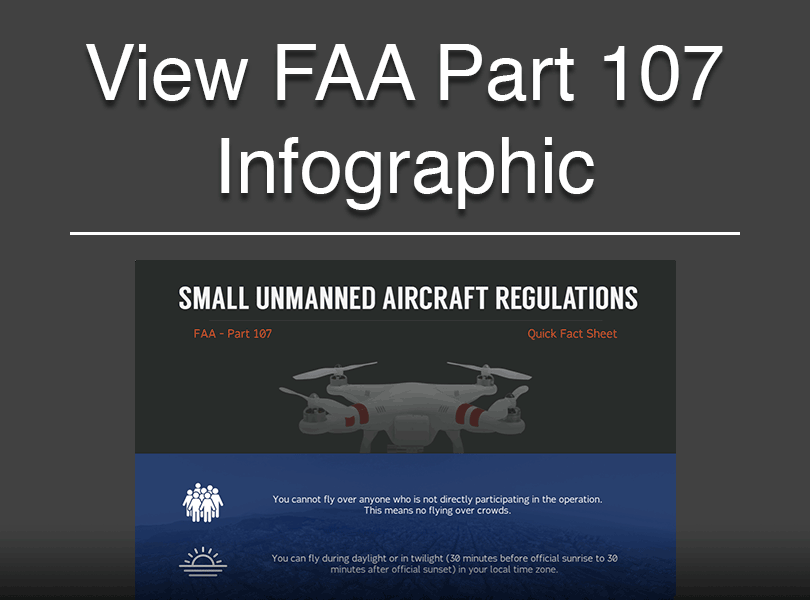
Currently, blanket exemptions are in force which allow commercial operators to fly below 200 feet and use aircraft that weigh less than 55 pounds. Operators must follow restrictions such as keeping a certain distance away from airports and manned aircraft, as well as daytime and visual line of sight rules.
For any requirements that fall outside of the blanket exemptions, commercial drone operators need to wait for their permit before they can begin operations.
Choosing the right drone for your business
Unmanned aerial systems have quickly evolved from a pastime for drone enthusiasts to indispensable tools in a variety of sectors. But each industry requires a drone that meets certain requirements. Drone selection is usually based on the services you'll provide.
While most drones are similar in design and operation, some are packaged for particular applications. Industry specific drones are often equipped with unique payloads and technologies.
The DJI’s Phantom 4 and the Parrot Disco FPV, for example, are popular choices for aerial photography and video. Depending on your budget, the technology and ability of the drone, there is a wide array from which to choose that range in price from $300 up to well over $1000.
Drones designed for surveying and/or mapping purposes come at a higher price tag because of the hardware and software requirements for such applications.
Professional surveying drones can cost up to $10,000 or more, depending on the model. Usually, these systems are packaged with surveying specific technologies such as RGB and NIR cameras, high resolution imaging, longer flight times, autonomous flight, and faster speeds.
For the budget conscious, less expensive drones can capture aerial surveying images and inspection. However, creating a professional business with a quality product does require investment in a more robust system.
Lastly, an investment in a good drone requires further expenditure on accessories and software. Items such as spare batteries to limit down-times, replacement parts in the event of crashes, and software such as photo editing tools and data storage are essential in keeping a drone-based business running smoothly.
Launching your business and getting the word out
Based on the number of commercial exemptions granted by the FAA, the interest in creating drone-based businesses is very high. And though the industry is still in its infancy, it’s vital to market your business.
The digital age has made it a little easier to market your business. Platforms such as the internet and social media are valuable resources to help level the playing field somewhat. Other recommendations include joining and contributing to professional UAV organizations that exist around the country and online. Networking with business professionals in the field can establish you and your organization as an authoritative voice in the sector.
Likewise, an online advertising budget can help increase your brand’s reach. Advertising online is less costly than traditional marketing methods and can reach millions of potential customers and clients.
UAVs are extremely popular right now, and there is no better time to start a business in the sector. With preparation, effort and investment your drone-based business can succeed.
Other Resources

 Unmanned advancements help first responder's efforts
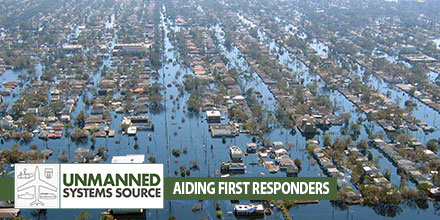
When disaster strikes we look to the men and women in emergency services to render aid to those affected. Thanks to advances in technology, first responders now have unmanned systems to help in those efforts.
Currently, unmanned helpers include Unmanned Aerial Vehicles and robots equipped with sensors, cameras, and even microphones.
Unmanned advancements help first responder's efforts
When disaster strikes we look to the men and women in emergency services to render aid to those affected. Thanks to advances in technology, first responders now have unmanned systems to help in those efforts.
Currently, unmanned helpers include Unmanned Aerial Vehicles and robots equipped with sensors, cameras, and even microphones.
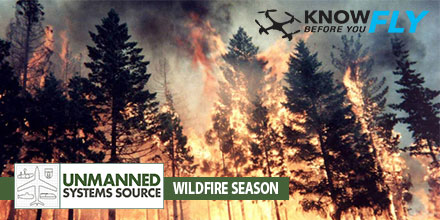 "Know Before You Fly" Urges Operators to Stay Away from Wildfires, Adhere to Temporary Flight Restrictions
  The use of Unmanned Aerial Vehicles (UAVs) and all their forms – drones, multi-rotors, and quad-copters – has exploded in recent years. This explosive growth, coupled with increased affordability, has transformed the way industries approach business.
The film and photography industry are such an example; drone technology now provides access to views that were previously the domain of helicopters and fixed wings.
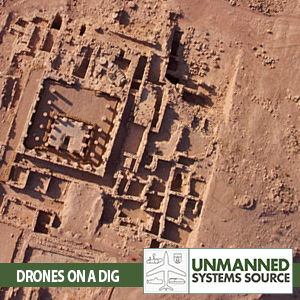
The advantages of drone-based imaging are many, and unmanned aircraft are fast becoming an indispensable tool to various industry professionals, including archaeologists. Drones offer archaeologists the ability to survey existing and future excavation sites in detail as well as provide a different perspective to workers on the ground.
The use of Unmanned Aerial Vehicles (UAVs) and all their forms – drones, multi-rotors, and quad-copters – has exploded in recent years. This explosive growth, coupled with increased affordability, has transformed the way industries approach business.
The film and photography industry are such an example; drone technology now provides access to views that were previously the domain of helicopters and fixed wings.
The advantages of drone-based imaging are many, and unmanned aircraft are fast becoming an indispensable tool to various industry professionals, including archaeologists. Drones offer archaeologists the ability to survey existing and future excavation sites in detail as well as provide a different perspective to workers on the ground.
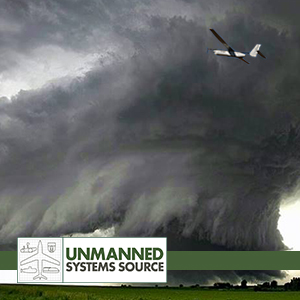 The growth of UAV applications in recent years has led to a surge of innovation in Industry and Scientific Research. Weather Forecasting and accurate storm path prediction is one such area that continues to benefit from the unique capabilities UAVs offer – including the possibility of lengthening tornado warning times up to 3-fold.
Currently, Meteorologists employ Doppler radar to help predict where a Tornado will hit to within 20 minutes. But Doppler radars has its limitations; it cannot measure air pressure directly and it is also designed to monitor higher altitudes.
Acquiring detailed air pressure measurements from ground level to 1000 feet, known as the “sweet spot”, has been problematic. UAV technology may hold the key to obtaining detailed and localized measurements, thus increasing accuracy.
The growth of UAV applications in recent years has led to a surge of innovation in Industry and Scientific Research. Weather Forecasting and accurate storm path prediction is one such area that continues to benefit from the unique capabilities UAVs offer – including the possibility of lengthening tornado warning times up to 3-fold.
Currently, Meteorologists employ Doppler radar to help predict where a Tornado will hit to within 20 minutes. But Doppler radars has its limitations; it cannot measure air pressure directly and it is also designed to monitor higher altitudes.
Acquiring detailed air pressure measurements from ground level to 1000 feet, known as the “sweet spot”, has been problematic. UAV technology may hold the key to obtaining detailed and localized measurements, thus increasing accuracy.
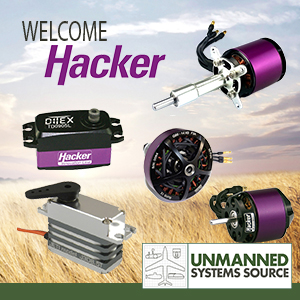 May 19, 2016 – Unmanned Systems Source is pleased to announce our latest distribution partner, Hacker Motors. Hacker Motor’s specializes in high quality, brushless motors and controllers for commercial and industrial purposes.
Hacker products include the complete line of brushless motors and controllers ranging from 25 watts to 15,000 watts for RC, UAV and industrial applications. Hacker also offers in-runners and out-runners to direct drive and geared, Hacker likely has a quality lightweight motor to fit your needs.
Unmanned Systems Source also offers Hacker’s DITEX telemetry servos which incorporate the latest in digital position encoders and a powerful 32-bit processor for a truly digital servo. DITEX servos also offer programmability, via a USB adapter and the manager software, and delivers numerous data points to compatible telemetry systems.
"I think developers and integrators will be really pleased with the power, programmability and price-point that the DITEX provides," said Drew Osbrink, Solutions Engineer for Unmanned Systems Source.
Visit
May 19, 2016 – Unmanned Systems Source is pleased to announce our latest distribution partner, Hacker Motors. Hacker Motor’s specializes in high quality, brushless motors and controllers for commercial and industrial purposes.
Hacker products include the complete line of brushless motors and controllers ranging from 25 watts to 15,000 watts for RC, UAV and industrial applications. Hacker also offers in-runners and out-runners to direct drive and geared, Hacker likely has a quality lightweight motor to fit your needs.
Unmanned Systems Source also offers Hacker’s DITEX telemetry servos which incorporate the latest in digital position encoders and a powerful 32-bit processor for a truly digital servo. DITEX servos also offer programmability, via a USB adapter and the manager software, and delivers numerous data points to compatible telemetry systems.
"I think developers and integrators will be really pleased with the power, programmability and price-point that the DITEX provides," said Drew Osbrink, Solutions Engineer for Unmanned Systems Source.
Visit 