Description
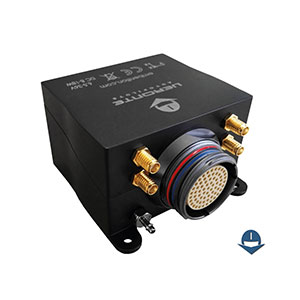
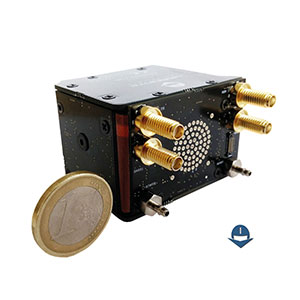
The Veronte Autopilot is a miniaturized, highly reliable avionics system for advanced control of UAV and UAS. It is embedded with a suite of state-of-the-art sensors and processors as well as a LOS and BLOS M2M datalink. The Veronte Autopilot also boasts a reduced size and weight.
Operational Highlights
With a unique Plug ‘n Fly control system, Veronte Autopilot brings fully autonomous control capabilities to any unmanned system for complete operation. It is compatible with: UAV, Drone, RPAS, USV, UGV, and more.
- Fully configurable: User can define payload, platform layout, control phases, control channels…
- Custom routines: User selectable automatic actions, based on system event or periodic need.
- Actions: phase change, activate payload, move servo, go-to, onboard log, parachute release
- Events: waypoint arrival, inside/outside polygon, alarm, variable range, button…
- Telemetry & log: Embedded datalink for telecommand and system monitoring; customizable user log in both onboard and control station — all with user defined variables and frequency record.
- External sensor: Supports external sensors: magnetometer, radar, LIDAR, RPM, temperature, and more.
- Payload & Peripheral: Transponder, secondary radios, satcom transceivers, camera gimbals, motor drivers, photo cameras, flares, parachute release systems, tracking antennas, pass through RS232 & CAN tunnel…
Supported Platforms
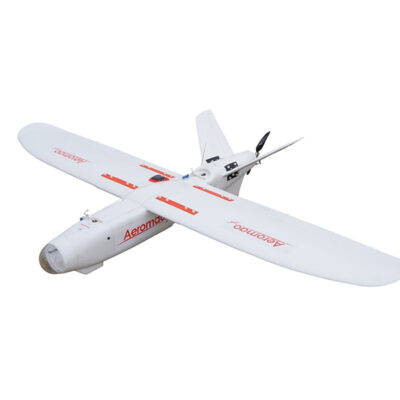
The Veronte autopilot is designed to control any unmanned vehicle (multirotor, helicopter, airplane, VTOL, UGV, USV). It offers custom flight phases and control channels to support any aircraft layout and performance by using the same software and hardware for various unmanned vehicles.
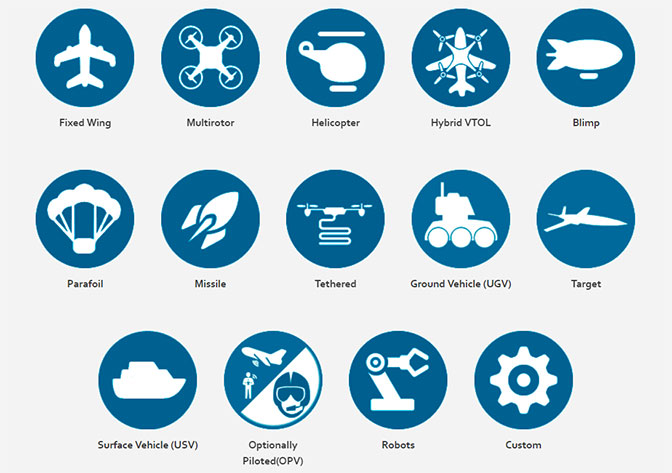
The Veronte Autopilot provides fully autonomous aircraft control — from take-off to landing It is also compatible with any platform configuration: VTOL, flaperons, elevons, custom tail (V, X, T, H…), control w/o ailerons, hybrid, etc.
Standard flight phase database includes: take-off (catapult, hand launch, runway, airdrop), climbing, loiter, waypoint route, hover, hold, descending, landing (runway, net, deep-stall, flare, moving platforms, linear landing), flare. And, it offers user customizable phases for any aircraft behavior customization, it is user configurable up to PID level.
Veronte Cloud
The embedded M2M module provides 4G communications and connects to Veronte Cloud servers for online control of unmanned vehicles. Operators can control their UAVs via the internet and, as such, perform Beyond Line of Sight (BLoS) operations.
This feature also enables online UAV telemetry synchronization and remote monitoring. These features make the Veronte Autopilot a key instrument for Unmanned Traffic Management (UTM) systems, like Veronte UTM.
Advanced Performance
- One Click Missions: Its user-friendly interface allows operators to program missions (mapping, surveillance, delivery) with a single “click”.
- Sense & Avoid: Radar, LiDAR or transponder based, provides collaborative and uncollaborative sense and avoid on autonomous missions.
- Adaptive Control: PID operational auto-tuning for platforms with variable plant, such as: fumigation aircrafts, cargo delivery, tethered drone, etc.
- Control Modes: At any time during flight, operators can choose automatic, manual, assisted manual and combined control modes.
- Gimbal / Tracker Stabilization and Pointing: Target pointing, fixed attitude from platform, fixed attitude from ground, and follow control modes.
- Simultaneous Operation: Supports up to 64 units control & multiple control stations with control or monitoring permissions.
- Communications: Satellite and 4G communications for BLOS operations and custom radio modules.
- Wind: In-flight wind estimation for aircraft control correction.
- RTK: Provides precise positioning up to cm level with the embedded GNSS module, no extra hardware needed.
- Dual GNSS: Embedded with dual GNSS for GPS positioning, GNSS attitude estimation (no magnetometer needed).
- Redundant IMU: Embedded redundant IMU and barometer for increased reliability and performance.
- Environmental Protection: Aluminium enclosure available for adding water protection up to IP67 level and EMI / EMC shielding.
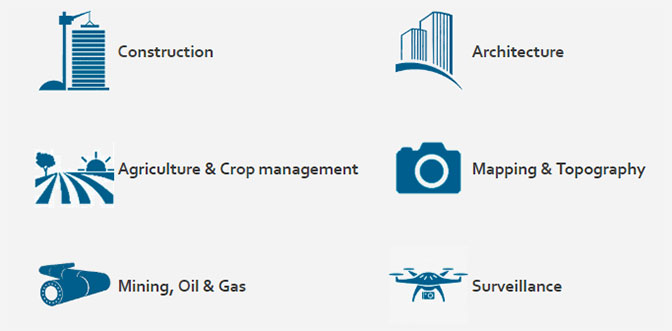
Industries & Applications
Veronte Point Interface
The Veronte Pipe team developed a highly intuitive application which permits users to configure a customized operational environment. This application allows users to control any Veronte based platform using the same interface, whether from a PC / Tablet using Windows, Linux or MAC.
This easy-to-use application permits users to operate the system with no pilot training. Configurable layouts permit users to load custom background maps (Google, Bing, Yahoo, or user images). Telemetry displays can be placed as desired on the screen.
The mission definition tool is an on-map drawing tool for intuitive path design. On Veronte Pipe, users can define waypoints as well as custom links between: waypoints, relative waypoints to a moving object, obstacle definition, no-go areas. All of which users can edit during flight.
Safety & Certification
Veronte systems are designed and manufactured following the strictest safety and quality standards. Veronte Autopilot meets DO-178C / ED-12 and DO-254 regulations. Compliant with STANAG 4671, IEEE STD 830-1998 and STANAG 4703.
DDP and evidence documentation package available for UAV / RPAS / Drone certification, valid also for the System Safety Assesment (SSA).
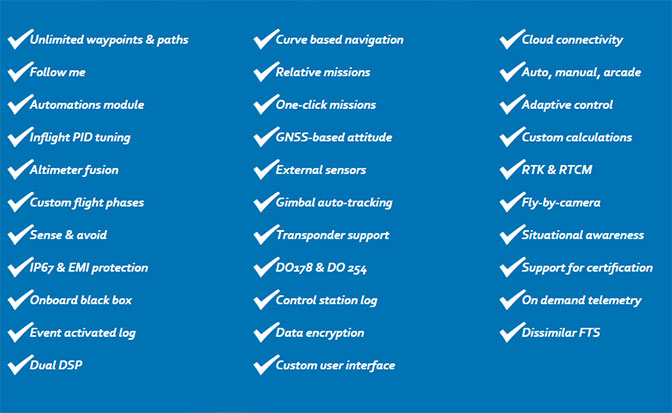
Main Features
About Embention
Embention develops components and critical systems for UAS (Unmanned Aircraft Systems). Founded in 2007 and based in Spain, Embention began with the development of an autonomously guided firefighting bomb, Flamingo. This technology was applied to the development of equipment for unmanned aircrafts, and complete UAV / RPAS.